



May 12, 2026, 16:00
The Most Popular Roulette Strategies Explained
Although roulette is at its core a pure game of chance, many players choose to structure their sessions with a fixed system. By using techniques such as the roulette Martingale or the well-known double up roulette strategy, they try to bring structure to their playing style and keep emotions out of the equation. It is essential to first know the basics and have a solid understanding of the rules of roulette.
The beauty of these systems is the sense of control they give you over the game: even with a challenging game like roulette, a good strategy helps you sit at the table with extra focus and discipline. Of course, chance always plays a role and the house edge is a fixed given, but a deliberate approach helps you manage your bankroll wisely and experience every spin of the wheel with greater confidence.
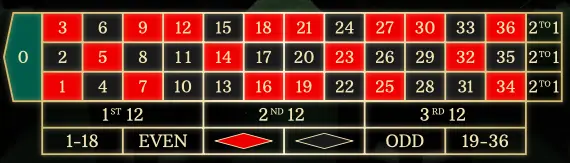
Discover roulette at PepperMill Casino and test your strategy today!
The Martingale strategy: doubling after a loss
The roulette Martingale is without a doubt the best-known roulette strategy in the world. The principle behind this roulette doubling strategy is simple: you try to immediately undo your losses by doubling your bet after every losing round. This is most commonly applied to outside bets (such as red/black), because these offer a winning chance of almost 50%. As soon as the ball lands on the right color or number, you win back all your previous bets from that sequence in one go, plus a profit.
How does Martingale work in practice?
Say you start with a base bet of €5 on red:
· Round 1: You bet €5 and lose. (Total loss: €5)
· Round 2: You double to €10 and lose. (Total loss: €15)
· Round 3: You double to €20 and lose. (Total loss: €35)
· Round 4: You double to €40 and win! You receive €80.
With this win, you have recovered all your previous bets in one go. This means that even after four rounds, you still have that €5 profit in your pocket, exactly your intended starting bet.
You are immediately back in the black and can start a brand new sequence feeling good!
What should you watch out for?
Although the logic of the Martingale seems airtight, there are two important factors every player should be aware of:
· Exponential growth: Bets escalate faster than you might expect. After 7 or 8 losses, the amounts can become quite high, putting a serious strain on your bankroll.
· Table maximums: Every casino sets a maximum bet per table. If you go on a long losing streak, the next doubling may exceed the table limit, preventing you from completing the sequence.
It is an exciting way to play that provides clear structure, as long as you stay aware of your limits, avoid chasing your losses, and enjoy the dynamics at the table!
The Paroli strategy: doubling after a win
Where the Martingale focuses on recovering losses, the roulette Paroli does exactly the opposite. This system, also known as the "Reverse Martingale," is designed to make the most of your winning streaks.
How does Paroli work in practice?
The principle is simple and effective: instead of doubling after a loss, you double your bet after every win. Most players follow the "rule of three":
· Start: You begin with a base bet (for example €5).
· Win: Did you win? Then you double your bet to €10.
· Second win: Win again? Then you double to €20.
· Third win: After three consecutive wins, you cash in your profit and return immediately to your base bet of €5.
If you lose a round, there is no need to panic: you go straight back to your starting bet. This means you are primarily playing with the profit you earned in previous rounds.
A positive system with less risk
The great advantage of the roulette Paroli is the sense of calm the system provides. Because this is a positive progression system where your bets only increase when you win, your own stake remains well protected. You never risk the exponentially escalating bets you see with loss-based strategies.
This results in a considerably lower risk profile, making it a very accessible strategy for both beginners and experienced players. It is the perfect way to responsibly and excitingly get the most out of a lucky streak!
The Fibonacci strategy: mathematics at the roulette table
For players who enjoy a smart and controlled approach and like to dive into the mathematics of roulette, the roulette Fibonaccisequence is an excellent choice. This system is based on the famous medieval number sequence in which each number is the sum of the two preceding ones (1, 1, 2, 3, 5, 8, 13, 21, and so on).
It is a system that requires patience and discipline, but it helps you absorb swings in your bankroll in a controlled way.
How does Fibonacci work in practice?
The principle is actually quite logical: you follow the numbers in the sequence. After a loss, you move one step forward, but after a win, you jump two steps back. This way, after a successful moment, you immediately return your bet to a safe, lower level.
Say you start with a bet of €5 (this is your "1"): The sequence you follow is: €5 – €5 – €10 – €15 – €25 – €40...
· Round 1: You bet €5 and lose. Move one step forward to the next €5.
· Round 2: You bet €5 and lose. Move to the next step: €10.
· Round 3: You bet €10 and lose. Move to the next step: €15.
· Round 4: You bet €15 and win!
Because you won, you now do something smart: you move two steps back in the sequence. You skip the €10 and land straight back at the €5 bet. This way you secure your profit and start your next spin again with very low risk.
For the patient strategist
The Fibonacci method is perfect for players with a larger budget and a bit more patience. It is a tactical system where you are not trying to make everything right in one go, but rather building your profit step by step.
It offers a wonderful balance between structure and risk management, allowing you to enjoy every moment at the roulette table with peace of mind.
Which strategy suits you?
Not every player is the same, and that applies to the different roulette strategies as well. Where one player enjoys a bold approach with plenty of action, another prefers a calm pace and lower risk. To help you make the right choice, we have laid out the key systems side by side.
| Strategy | Type of Progression | Risk Profile | Suitable For |
| Martingale | Negative (up after loss) | High | Players who enjoy action |
| Paroli | Positive (up after win) | Low | Beginners and recreational players |
| Fibonacci | Negative (up after loss) | Medium | Patient players with a larger budget |
Practical advice for getting started with roulette
Are you a beginner? Then the Paroli strategy is often the best choice. It is a safe way to get to know the game, because you are mostly playing with the profit you have already earned. Your own budget stays well protected as a result.
For experienced players looking for more depth and who have a larger budget available, the Fibonacci strategy is an interesting challenge. It requires more focus and patience, but offers a wonderful mathematical framework while playing.
Important to remember
Whatever strategy you choose, remember that roulette is always a game of chance. No system can fully eliminate the casino'shouse edge (approximately 2.7% in European Roulette). Strategies are meant to add structure and extra excitement to your game, but always play responsibly and keep it fun.
What is the Martingale strategy in roulette?
The Martingale is a negative progression system in which you double your bet after every loss. A win covers all previous losses, but a long losing streak can quickly lead to very high bets.
What is the difference between Martingale and Paroli?
With the Martingale you double after a loss, with the Paroli you double after a win. The Paroli has a lower risk profile because you only reinvest winnings.
Does the Fibonacci strategy work in roulette?
The Fibonacci strategy structures your bets based on a fixed number sequence. It reduces the risk of large losses compared to the Martingale, but does not eliminate the house edge.
What is the zig zag method in roulette?
The zig zag method is based on observing alternating outcomes at the table. It is not a mathematically supported strategy, as every spin is independent of the previous one.
Does a foolproof roulette strategy exist?
No. All strategies structure your bets, but the house edge is always present. In European Roulette, this is approximately 2.7%.
 Blog
Blog