
Published onNov 5, 2026
Street bets in online roulette: rules, payouts and probabilities
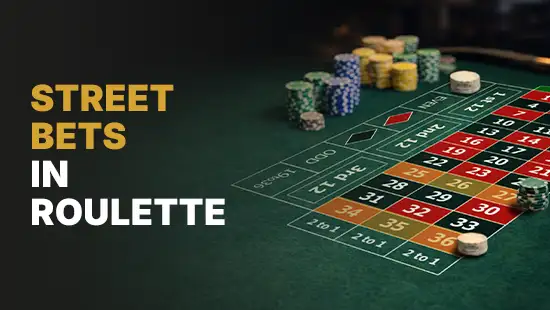
A street bet in roulette, also known as a three-number bet, allows you to cover three numbers with a single chip. It pays 11 to 1 if you win, but the chances of success remain limited: 8.11% in European roulette and 7.89% in American roulette. Here's how this bet works, how much it pays and what risks it involves.
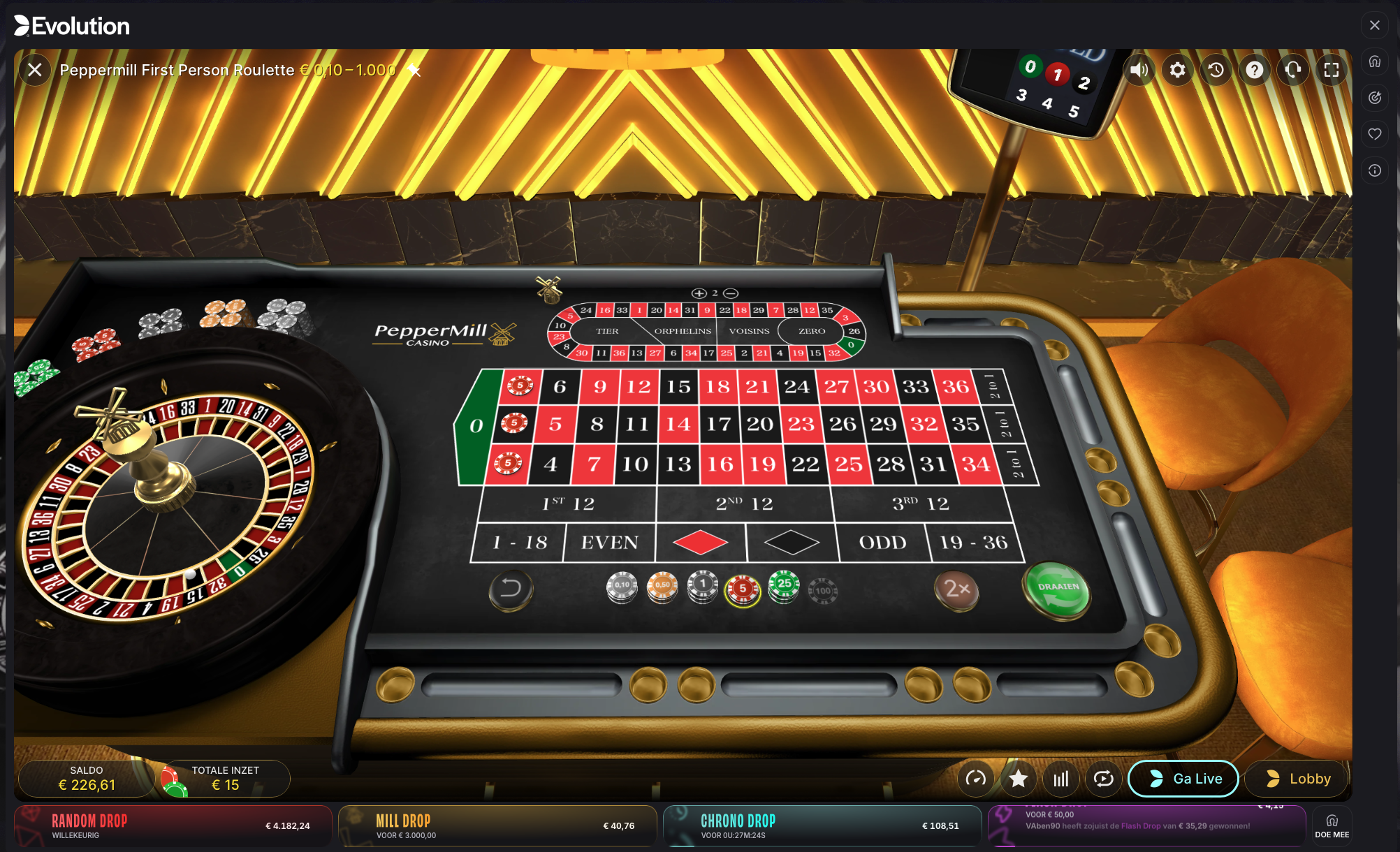
A street bet covers three numbers
In roulette, several types of bets allow players to select multiple numbers simultaneously. Among them, a street bet covers exactly three consecutive numbers in the same row of the betting layout. If the ball lands on one of the three selected numbers, the bet wins.
Contrary to what some beginners might think, you cannot simply select any three numbers. The numbers must belong to the same row on the betting layout.
The layout contains 12 standard streets, covering numbers 1 to 36. They are identical in European, French and American roulette.
Where should you place your chips for a street bet in roulette?
You must place your chips on the outer edge of the selected row. However, the layout may vary depending on the interface. On some tables, the three numbers appear vertically, while on others, particularly on mobile devices, they form a horizontal row.
A chip placed in the centre of a numbered square represents a straight-up bet on a single number. Placed on the line separating two squares, it covers two numbers. At the intersection of four squares, it covers four numbers. However, when the chip is placed on the outer edge separating two rows of three numbers, it becomes a line bet, covering six numbers.
Incorrect chip placement can therefore change both the potential payout and the chances of winning.
How much does a winning street bet pay in roulette?
A street bet pays 11 to 1. In other words, a winning bet generates a profit equal to eleven times the amount wagered.
Here are a few examples:
| Initial bet | Profit | Total returned |
| €1 | €11 | €12 |
| €2 | €22 | €24 |
| €5 | €55 | €60 |
| €10 | €110 | €120 |
| €25 | €275 | €300 |
| €100 | €1,100 | €1,200 |
However, if none of the three selected numbers comes up, the entire stake is lost.
What are the 12 possible street bets in roulette?
Each street corresponds to three numbers in the same row. The 12 combinations are:
| Street | Numbers covered |
| 1 | 1, 2, 3 |
| 2 | 4, 5, 6 |
| 3 | 7, 8, 9 |
| 4 | 10, 11, 12 |
| 5 | 13, 14, 15 |
| 6 | 16, 17, 18 |
| 7 | 19, 20, 21 |
| 8 | 22, 23, 24 |
| 9 | 25, 26, 27 |
| 10 | 28, 29, 30 |
| 11 | 31, 32, 33 |
| 12 | 34, 35, 36 |
These groups relate only to the arrangement of numbers on the betting layout. Numbers that are next to each other on the layout are not necessarily adjacent on the roulette wheel.
Can you place several street bets at the same time?
You can place multiple street bets during a single spin. This approach allows you to cover more numbers, but it also increases the total amount wagered.
For example, four different street bets can cover all twelve numbers in a complete dozen.
With a €1 bet on each of the four streets, the player wagers €4 in total. If one of the twelve selected numbers comes up, the winning street bet pays €11 in profit. The other three bets are lost, leaving a net profit of €8 for the entire spin. If none of the twelve numbers comes up, the full €4 is lost.
This setup covers 12 of the 37 pockets, representing approximately 32.43% of the possible outcomes in European roulette. It offers the same probabilities and financial result as a total €4 bet on the corresponding dozen.
Street or line bet: which bet should you choose?
A line bet covers two adjacent rows, or six numbers in total. It pays 5 to 1, compared with 11 to 1 for a street bet.
| Bet type | Street bet | Line bet |
| Numbers covered | 3 | 6 |
| Payout | 11 to 1 | 5 to 1 |
| Chance of winning in European roulette | 8.11% | 16.22% |
| Chance of winning in American roulette | 7.89% | 15.79% |
A line bet therefore wins more frequently, but the profit from each winning bet is smaller.
Both bets have the same house edge when played on the same roulette variant. The main difference lies in how frequently they win and how much the results fluctuate.
Street bet or red and black: which is more profitable?
Colour bets offer a much higher probability of winning than a single street bet.
In European roulette, a bet on red or black covers 18 of the wheel's 37 pockets, while a street bet covers only three. In return, a colour bet pays just 1 to 1, compared with 11 to 1 for a street bet.
Wins are therefore more frequent when betting on colours, but the payouts are smaller.
Can you include zero in a street bet?
Zero is not part of any of the twelve standard street bets. However, there are two special three-number bets that include zero, known as trios.
On single-zero European and French roulette tables, the possible combinations are 0, 1, 2 and 0, 2, 3. Chips must be placed at the intersection of the relevant numbers. These bets offer the same payout as a standard street bet, namely 11 to 1, with an 8.11% probability of winning. The only difference concerns the numbers covered and their position on the betting layout.
There is also a first four bet, which covers 0, 1, 2 and 3. It pays 8 to 1 and has a 10.81% probability of winning on a 37-pocket roulette wheel.
American roulette tables have specific configurations due to the presence of the double zero. Some allow bets on 0, 1, 2 or 00, 2, 3.
Exact chip placement may vary depending on the rules of the game. It is therefore important to consult the game rules before placing a bet.
Mistakes that can cost beginners dearly
Street bets may seem simple, but certain misunderstandings are common.
The first concerns chip placement. A bet placed directly on a number does not cover the entire row. Similarly, a chip placed at the intersection of two rows may turn the wager into a line bet.
Another common mistake is confusing profit with the total amount returned. An 11-to-1 payout means that a winning €10 bet generates €110 in profit, plus the return of the original €10 stake.
Some players also believe that placing more street bets automatically improves profitability. However, each additional street requires another bet, increasing the total amount at risk.
Finally, expecting a particular combination to appear after a long losing streak reflects a misunderstanding of probability. Since spins are independent, previous results do not influence the next outcome.
Key takeaways about street bets in roulette
A street bet covers three numbers belonging to the same row, from the twelve standard combinations on the betting layout. Its 11-to-1 payout can generate a substantial profit from a single winning bet. However, the probability of success remains limited to 8.11% in European roulette and 7.89% in American roulette.
A street bet is simply a way of distributing your stake, not a method for beating the casino. Understanding probabilities and managing your budget remain essential to avoid confusing winning frequency with profitability.
To learn more about roulette, check out our guides to roulette terminology and roulette strategies. You can also practise with our free roulette simulators, available now at PepperMill Casino.
 Blog