


July 16, 2026, 13:00
Value Betting in Poker: How to Get Maximum Value From Strong Hands
Most people think poker is all about huge bluffs and exciting all-ins, but in reality, most poker profits come from something much simpler: value bet poker and smart value betting with strong hands. A lot of beginner players lose money here without even realizing it. They often check with strong cards or bet too small, which means they miss out on extra value. By learning how to value bet correctly, you can get the maximum profit from your strong hands and build your stack much more consistently.
In games like Texas Hold'em, poker is not just about luck. A big part of winning comes from how well you play your poker hands and combinations in different situations.
But what exactly does that mean?
What is a value bet in poker?
A value bet in poker means betting when you think you have the stronger hand and expect weaker hands to still call. The idea is to get as many extra chips as possible from opponents who are behind.
Ready to practice value betting yourself? Play poker at PepperMill and bring your strategy to the table.
What is a value bet?
A value bet is a bet or raise made with the intention of getting called by a weaker hand. The main goal is to win as many chips as possible when you believe you are ahead.
For example, imagine you hold A-K and the flop comes K-7-2 rainbow. You have top pair with the best kicker. In this spot, many opponents will still call with hands like K-Q, K-J, or even smaller pocket pairs such as 8-8. By betting at the right moment, you put pressure on weaker hands while still getting value from them.
This is also the main difference between value betting and bluffing in poker. With a bluff, you want your opponent to fold. With a value bet, you actually want them to call.
Why is value betting so important?
Value betting is a big part of winning at poker. You do not get really strong hands that often, so when you finally do, you want to win as many chips as possible from them. A lot of players also play quite passively and will not build the pot on their own, which is why you usually need to take the lead with your bets.
Over time, all those small value bets add up. Across thousands of hands, they can make a huge difference in your overall win rate.
At low and mid stakes tables, most sessions are not won by the best bluffer. They are usually won by the player who extracts the most value from strong hands. Bluffing is important, but it is not the core of profitable poker.
At micro stakes, it is estimated that around 70 to 80 percent of a winning player’s profit comes from value betting alone, which shows just how important this skill really is.
Thin value vs thick value: know the difference
There are two main types of value betting: thick value and thin value. The difference mainly depends on how strong your hand is compared to the range your opponent can call with.
Thick value is when your hand is clearly stronger than most of your opponent’s range. Examples include sets, two pair, or an overpair on a safe board. In these situations, you can usually bet bigger because many weaker hands will still call.Example: you hold QQ on a Q-7-2 board. Here you can comfortably bet large because weaker top pairs and pocket pairs will often continue.
Thin value is when your hand is only slightly ahead of the average calling range. For example, top pair with a medium kicker against a loose opponent. In these spots, smaller bets are usually better because they keep weaker hands in the pot without isolating yourself against stronger hands.Example: you have K-J on a K-9-4 board against a player who calls often with weaker kings or middle pairs.
Value bet sizing: how much should you bet?
When value betting, your bet size depends heavily on the situation. In poker, there are three standard sizing categories that players commonly use.
Small sizing (25–40% pot)
This sizing is mainly used for thin value on dry boards. The goal is to keep weaker hands calling without putting too much pressure on them.
Medium sizing (50–70% pot)
This is the most balanced and common sizing. It works well against top pair-type hands or sticky opponents on semi-wet boards.
Large sizing (75–100% pot)
Large bets are usually used for thick value on wet boards with many draws or against calling stations who struggle to fold.
| Board texture | Hand strength | Recommended sizing | Example |
| Dry board (K-7-2 rainbow) | Thin value (top pair) | 25–40% pot | 75–100% pot |
| Semi-wet board (Q-9-6 with draws) | Strong top pair / overpair | 50–70% pot | QQ on Q-9-6 |
| Semi-wet board (Q-9-6 with draws) | Thick value (set / two pair) | 75–100% pot | QQ on Q-9-6 |
The key idea is that your sizing should always depend on which weaker hands you still expect to get called by.
When should you NOT value bet?
Value betting is powerful, but not every situation is good for betting. Sometimes checking is simply the better option.
For example, you should be careful when only better hands can still call you. In those situations, you basically “value own” yourself. A classic example is K-K on an ace-high board against a player who often has A-x. If you bet there, you usually only get action from stronger hands.
You should also avoid value betting when weaker hands are almost always going to fold anyway. If worse hands never call, your bet no longer creates extra value.
Multiway pots are another situation where caution matters. The more players involved, the higher the chance that someone has a stronger hand.
Against extremely passive “nit” players, value betting can also become less effective because they usually only continue with strong hands.
Value bet vs bluff: the important difference
A value bet and a bluff may sometimes look similar in terms of bet size and betting line, but the intention behind them is completely different.
A value bet wants a call.A bluff wants a fold.
In games like fast forward poker or other fast-paced formats, understanding this difference becomes even more important because decisions need to be made quickly.
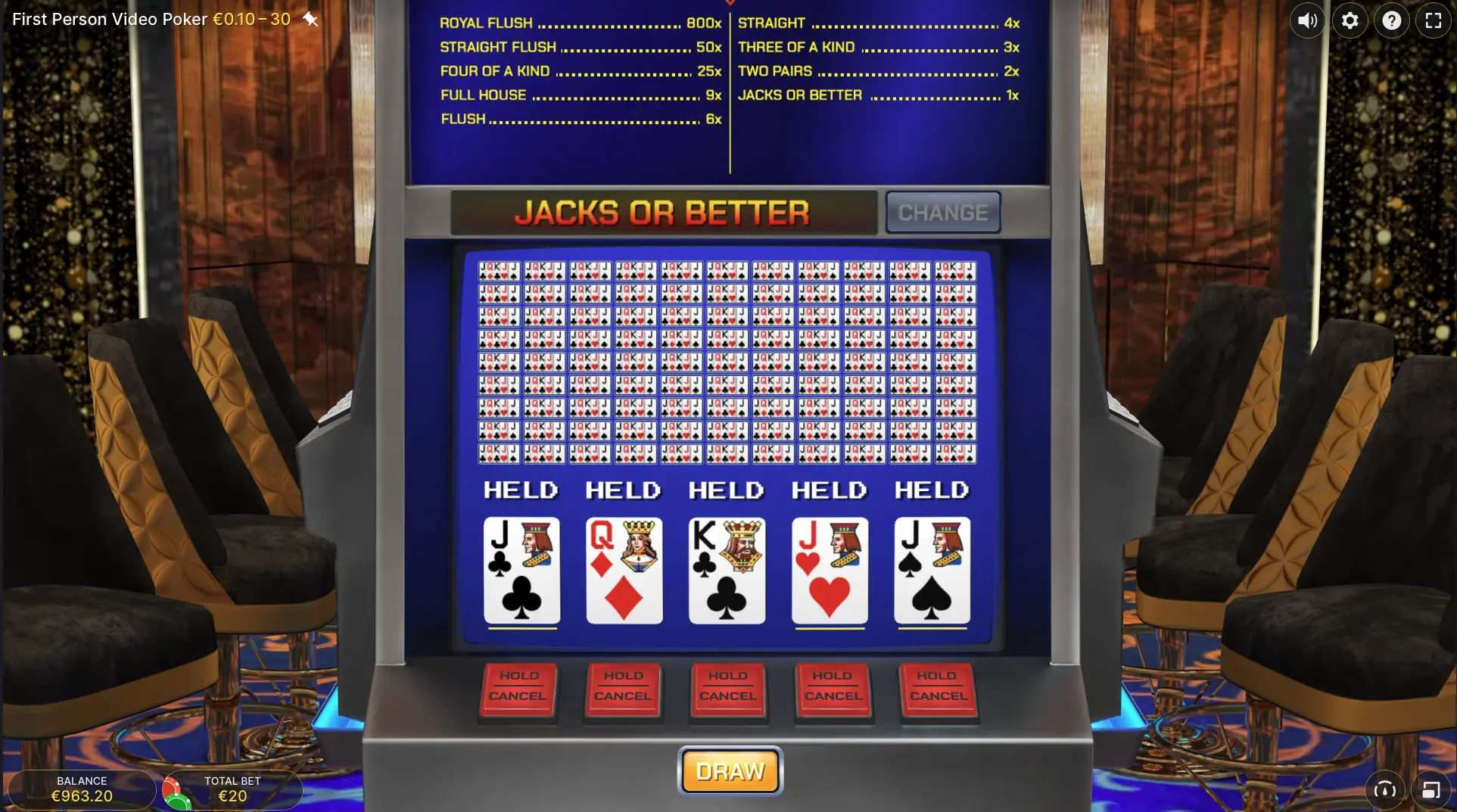
You can also clearly see this in online vs video poker. Online poker is about reading opponents and adapting to them, while video poker is mostly math-based and does not involve bluffing at all. If you are looking for a basic video poker explanation, the biggest difference is that video poker is played against software rather than against real opponents.
Good poker players always try to balance their value bets and bluffs. If you only value bet when you are strong, opponents will eventually stop paying you off. If you bluff too often, you simply get called too much. The combination of both makes you much harder to exploit.
On later streets, players often use what is called a polarized range. This means their betting range mainly consists of either very strong value hands or pure bluffs, with very little in between.
Position and stack depth: important tools for value betting
Two important factors in value betting are position and stack depth (SPR, stack-to-pot ratio).
When you are in position, you have more information because you act after your opponent. This allows you to make thinner value bets more comfortably. Out of position, you usually need to play more carefully and check more often in marginal spots.
Stack depth also changes how you approach value betting. With a low SPR, strong hands are often committed within one or two bets. With deep stacks, players usually think multiple streets ahead and plan their betting sizes from flop to river.
Whether you prefer poker or compare poker vs blackjack, poker remains one of the few casino games where skill, decision-making, and long-term strategy can truly influence your results.
Practice your value betting timing risk-free in demo mode or explore other table games at PepperMill. Always play responsibly and within your budget.
What is a value bet in poker?
A value bet is a bet you make with the intention of getting called by a weaker hand in order to extract maximum value from your strong hand.
What is the difference between a value bet and a bluff?
A value bet hopes to get called by a weaker hand to win the pot, while a bluff hopes to make a stronger hand fold so you can win without a showdown.
How big should a value bet be?
A common guideline is 25–40% of the pot for thin value and dry boards, 50–70% for more standard value spots on semi-wet boards, and 75–100% for thick value or against loose calling opponents.
What is thin value betting?
Thin value betting means making a smaller bet with a marginal hand that is only slightly stronger than the hands your opponent is likely to call with, such as top pair with a medium kicker.
When is value betting a mistake?
Value betting becomes a mistake when only better hands will call you, when all weaker hands are likely to fold anyway, or in multiway pots where your hand has only marginal value.
How often should you value bet?
There is no fixed frequency. At micro and low stakes, around 70–80% of a winning player’s profit often comes from value bets, so you should value bet as often as it is correct when you expect to have the best hand.
 Blog
Blog